2026-11-06 · Robert Ellis
Water Damage Restoration Considerations for Jacksonville's Hurricane Season
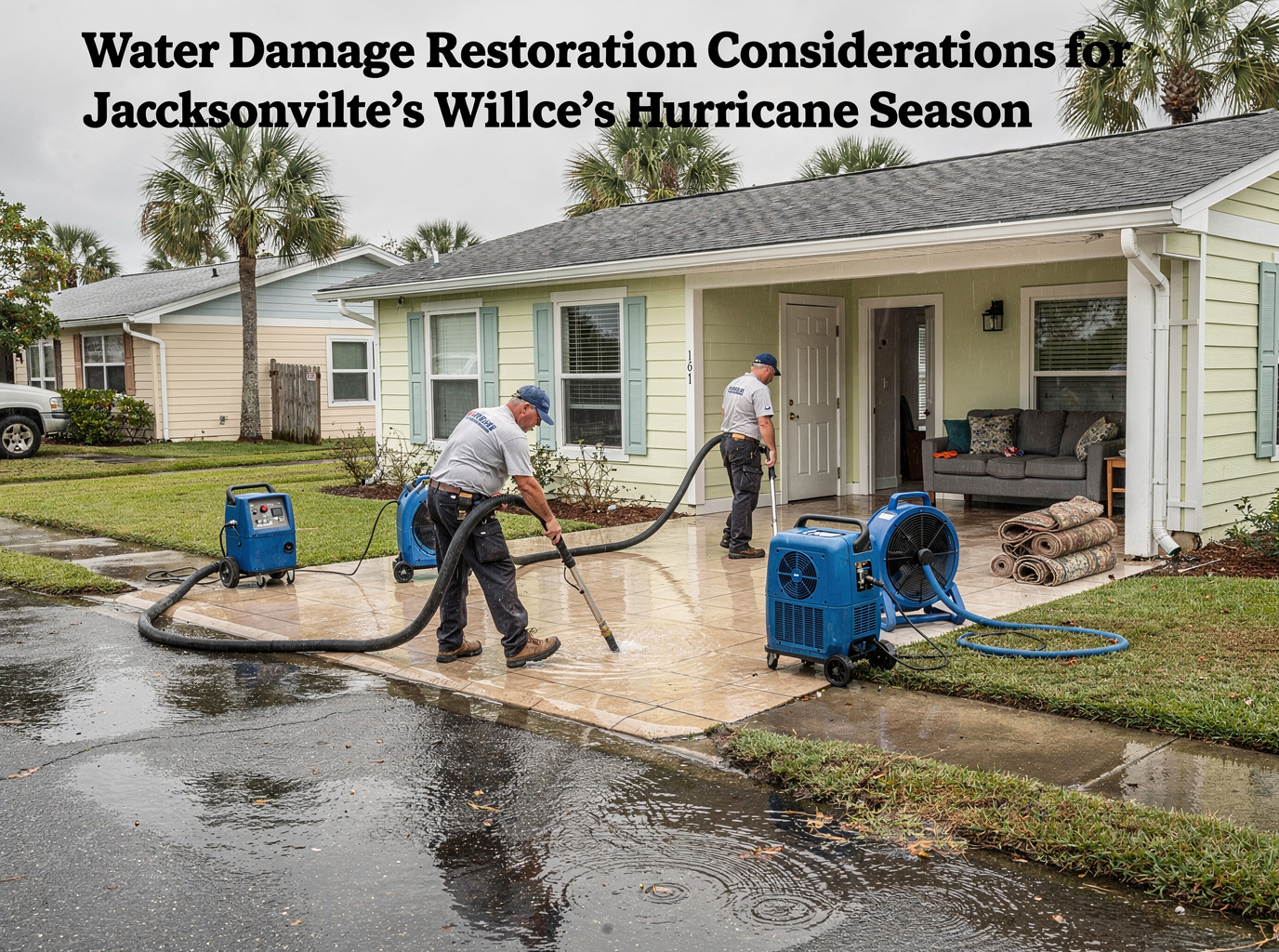
In Jacksonville's hurricane season, water damage restoration must prioritize extraction and drying within 24-48 hours because the humid subtropical climate with hot summers turns standing water into mold issues fast across Duval County homes near the St. Johns River.
Assessing Flood Risks Near the St. Johns River
Homes in Riverside, San Marco, and Downtown Jacksonville sit close to the St. Johns River and face repeated storm surge threats during hurricane season. Older housing stock in these neighborhoods often features crawl spaces and pier foundations that trap water longer than slab homes in Arlington or Mandarin. Terrain slopes gently toward the river, so floodwater moves into basements and yards quickly after heavy rain. Residents in Springfield and Avondale should map elevation points on their lots before storms arrive. Checking sump pump function and clearing storm drains reduces standing water volume that restoration crews later extract. What to Do After Flooding from the St. Johns River in Jacksonville outlines first actions that align with these local patterns.
Rapid Extraction in Humid Subtropical Conditions
Hot summer humidity in Jacksonville keeps relative moisture high even after rain stops, so water damage restoration teams run industrial air movers and dehumidifiers nonstop for several days. Properties in Mandarin and Arlington with larger lots collect more runoff from surrounding wetlands, extending drying times beyond what inland homes experience. Crews focus first on carpet pads and drywall below the two-foot flood line because those materials hold moisture against the mild winter temperatures that rarely freeze and help evaporate water. Using moisture meters at multiple wall depths prevents hidden pockets that later cause warping in wood floors common in Avondale homes. Water Damage Restoration crews familiar with Duval County adjust equipment placement for the consistent afternoon sea breezes that can either aid or hinder drying depending on window positioning.
Preventing Mold After Water Intrusion
Jacksonville's humidity speeds mold growth on wet drywall and insulation within 48 hours when temperatures stay above 80 degrees, a common condition through hurricane season. Restoration plans for homes in the Riverside and San Marco areas include HEPA air scrubbing right after extraction to capture spores before they spread through HVAC systems typical in 1960s-1980s builds. Removing baseboards early exposes the wall cavity base where moisture pools against concrete slabs. How Jacksonville Humidity Speeds Up Mold After Water Intrusion explains monitoring steps that match local conditions. Crews also treat exposed wood framing with antimicrobial solutions suited to the area's high organic soil content that can introduce additional contaminants during flooding.
Drying and Monitoring Steps for Local Housing
After initial removal, restoration in Jacksonville requires daily moisture readings on concrete slabs and subfloors because the mild winters allow slow evaporation that hides residual dampness. Homes in Springfield often have plaster walls that absorb more water than modern drywall, needing longer dehumidification cycles. Technicians place sensors in multiple rooms to track progress across the 900-2,400 square foot range common in these neighborhoods. Final clearance testing confirms levels below 15 percent moisture content before reconstruction begins. This sequence keeps secondary damage from affecting nearby properties in Orange Park and Atlantic Beach that share similar river-influenced drainage patterns.