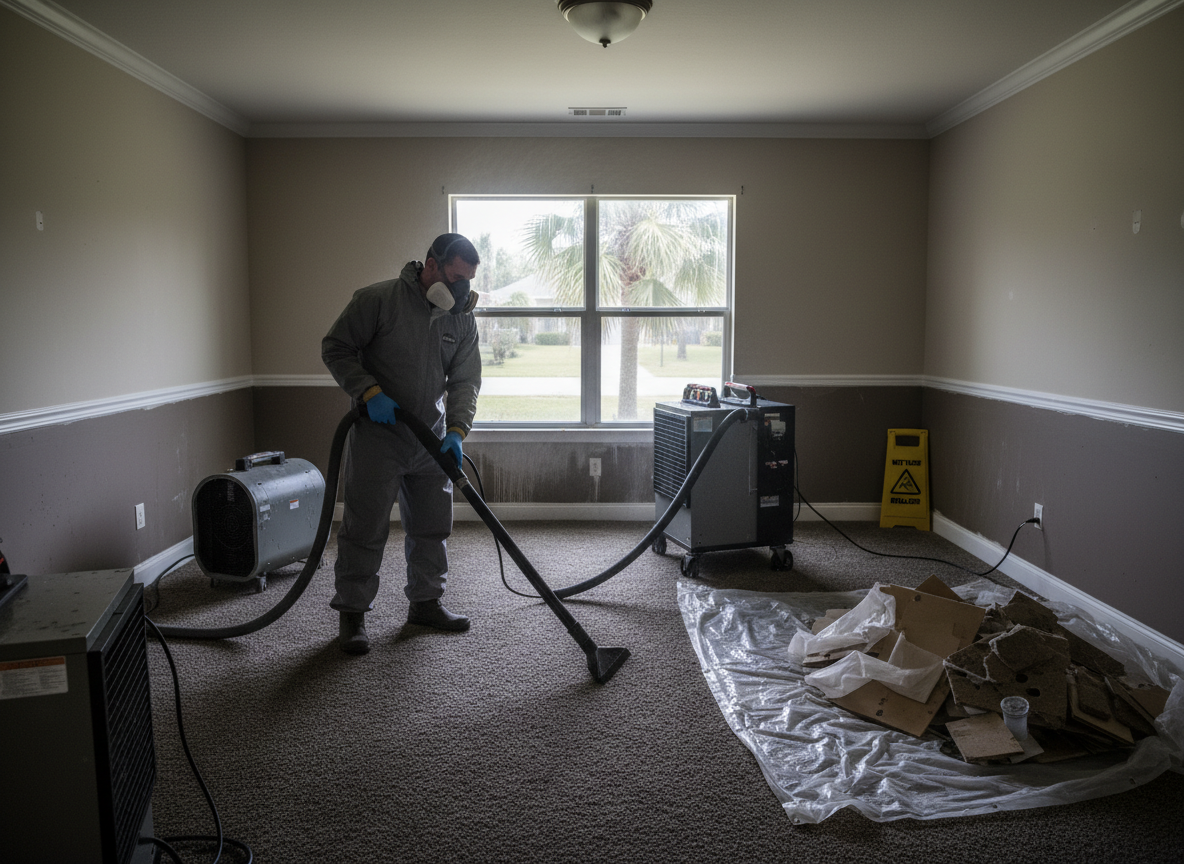
Jacksonville's humid subtropical climate keeps indoor moisture levels high even in mild winters, so standing water from a burst pipe or roof leak can quickly migrate into subfloors and wall cavities. Older wood-frame homes in Riverside and Avondale often have balloon framing and plaster walls that hide moisture paths, requiring moisture meters and infrared scans before any demolition. Technicians must pull baseboards and drill weep holes to prevent hidden mold growth that thrives in the area's consistent humidity.
Properties near the St. Johns River in San Marco and Mandarin face tidal influences and poor drainage in low-lying lots, so groundwater can re-enter structures hours after initial extraction. Crews stage air movers and dehumidifiers rated for high-grain conditions and monitor daily readings until drywall and framing reach manufacturer-specified dry standards. Failure to account for these local water tables leads to recurring musty odors and warped flooring.
In Springfield and Downtown Jacksonville, many 1920s–1950s homes share cast-iron or galvanized lines that corrode from the inside, creating slow leaks that saturate insulation under raised floors. Restoration teams coordinate with licensed plumbers for targeted pipe isolation rather than full repipes when only sections are compromised. This approach limits disruption while meeting Duval County permitting requirements for structural drying documentation.
Technician insight
In Jacksonville the thing that catches most people out with Emergency Water Damage Restoration is how quickly the humid air re-wets drywall and subfloors once equipment is pulled too early. Homes in Riverside and Avondale with balloon framing let water travel two stories up before it shows on the first floor, so skipping infrared scans always leads to callbacks.
San Marco Home After Heavy Rain
Water entered a 1940s San Marco bungalow through a clogged downspout and saturated the oak floors and insulation under the living room. We extracted 400 gallons, placed drying mats under the hardwood, and ran dehumidifiers for four days until readings stabilized. Floors were saved without full replacement and the homeowner moved back in the same week.
Emergency Water Damage Restoration Services We Offer
✓Emergency Water Extraction
Rapid removal of standing water from floors, carpets and crawl spaces using truck-mounted pumps sized for Jacksonville's frequent summer storms.
✓Structural Drying and Dehumidification
Placement of commercial air movers and low-grain dehumidifiers to bring moisture levels in drywall, subfloors and framing back to pre-loss condition.
✓Basement and Crawl Space Water Removal
Targeted pumping and drying of below-grade spaces common in Arlington and Mandarin homes where high water tables push moisture through foundations.
✓Water Damaged Drywall and Insulation Replacement
Selective removal and reinstallation of saturated drywall and insulation while preserving original trim in historic Riverside and Springfield properties.
✓Hardwood Floor Water Damage Repair
Cupped and buckled floor restoration using targeted drying mats and board replacement to match existing species found in older Jacksonville homes.
Emergency Water Damage Restoration Cost in Jacksonville, FL
| Service | Typical Range | What Affects It |
|---|---|---|
| Emergency water extraction | $250–$750 | Depends on gallons removed and number of rooms involved |
| Full structural drying package | $800–$2,200 | Includes equipment rental and daily checks for typical 3–5 day duration |
| Crawl space or basement drying | $400–$1,100 | Higher when groundwater re-entry requires extra dehumidification |
| Drywall and insulation removal | $1.75–$3.50 per sq ft | Varies with wall height and access in older homes |
Ranges are typical for Jacksonville, FL and confirmed with an exact written quote before any work starts.
How it works
- 1
On-Site Assessment
Technician arrives within hours, documents affected rooms with photos and moisture readings, and identifies hidden water paths in walls or under floors.
- 2
Water Extraction
Standing water is removed with portable and truck-mounted equipment while contents are relocated to prevent further saturation.
- 3
Drying And Monitoring
Equipment is positioned and daily moisture logs track progress until materials reach acceptable dry standards for the local climate.
- 4
Restoration And Repairs
Damaged drywall, flooring and trim are replaced or refinished to match original construction details.
Pricing
Pricing varies by water volume, affected square footage, and whether hidden moisture requires additional demolition.