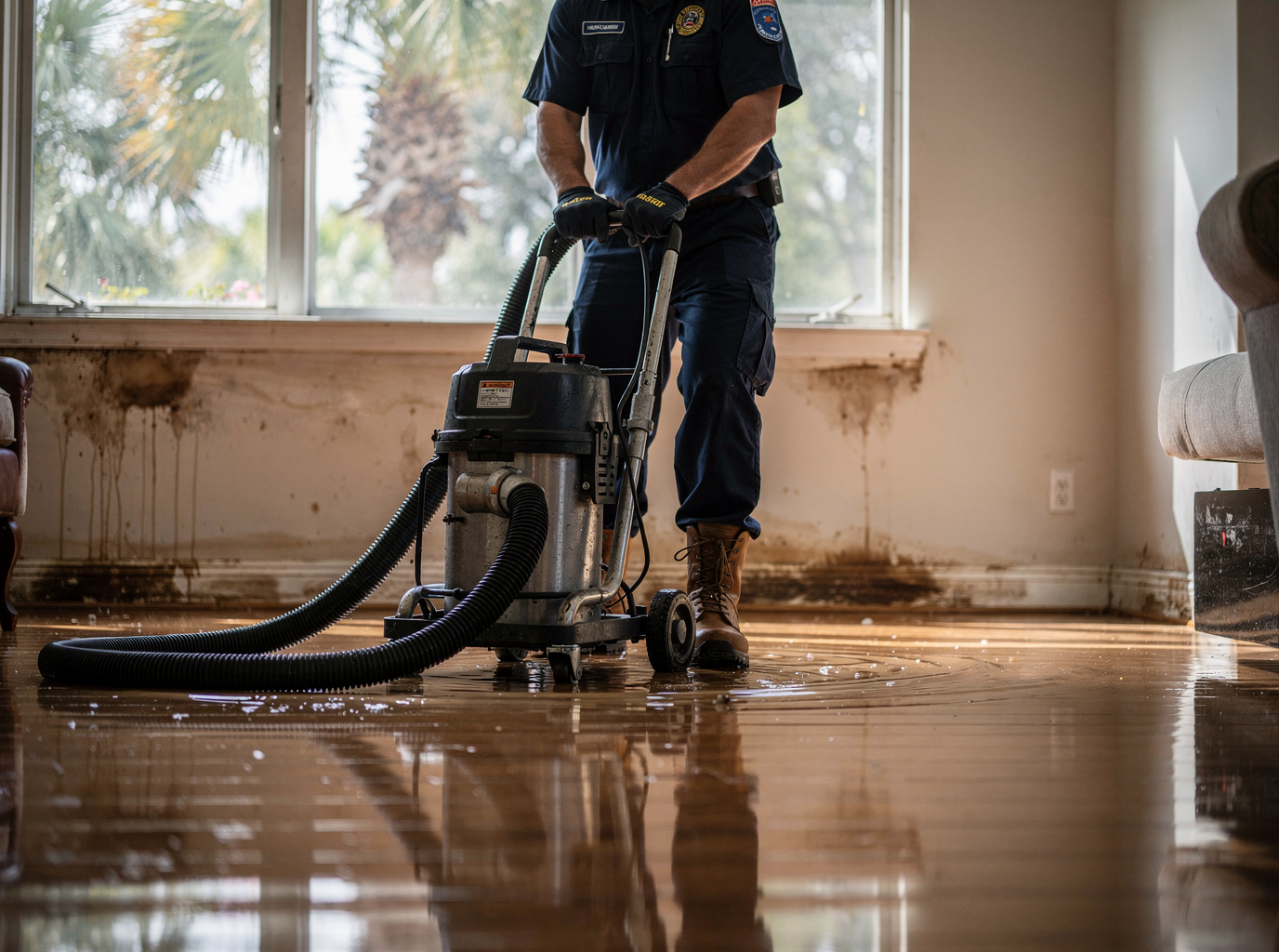
In Jacksonville's humid subtropical climate, standing water from St. Johns River overflows or heavy summer rains quickly saturates older wood-frame homes common in Riverside and Avondale. Extraction must begin within hours to limit moisture wicking into plaster lath and subfloors, especially in pre-1950 structures where hidden cavities behind brick veneer can hold water for weeks. Technicians use truck-mounted vacuums and submersible pumps rated for the silty sediment typical of Duval County floodwater, which clogs standard shop vacs and leaves behind fine particles that promote bacterial growth.
Downtown high-rises and Springfield row houses present different challenges: elevator shafts and shared basements allow water to migrate between units, requiring coordination with property managers and temporary power isolation. In Mandarin and Arlington, slab-on-grade homes built on clay-heavy soils often see water enter through foundation seams during king tides, so removal includes perimeter trenching and checking for hydrostatic pressure that can crack new seals if not relieved first.
Emergency protocols prioritize separating clean, gray, and black water categories on site. Black water from sewage backups near the river demands full PPE and HEPA air scrubbing from the start, while gray water from appliance failures in San Marco can sometimes be filtered and removed with less containment. All work follows Florida Building Code requirements for drying documentation before any reconstruction begins.
Access routes matter in neighborhoods like the historic district around Kingsley Plantation, where narrow driveways and mature landscaping limit equipment placement, forcing crews to stage pumps on the street and run long hoses through side yards without damaging irrigation lines.
Technician insight
In Jacksonville the thing that catches most people out with Emergency Water Removal is how fast the humidity re-soaks everything after you pump it out, especially in Riverside crawlspaces where the clay soil holds moisture against the piers for days.
Riverside Burst Pipe
A kitchen supply line failed overnight in a 1920s Riverside bungalow, sending water under the dining room hardwood and into the shared wall with the neighbor. We extracted 400 gallons, isolated the wall cavity, and ran drying equipment for four days until readings matched the unaffected rooms. The homeowner avoided mold growth that would have required full wall replacement.
Emergency Water Removal Services We Offer
✓Flood Water Extraction
Removes large volumes of river or rain water from yards and crawlspaces in low-lying areas like Mandarin and Arlington using high-capacity pumps.
✓Burst Pipe Water Removal
Targets sudden interior flooding from frozen or corroded lines common in older Riverside and Avondale plumbing, isolating affected rooms and extracting to subfloor level.
✓Storm Drain Backup Cleanup
Handles sewage and debris from overwhelmed municipal drains near Downtown Jacksonville and Springfield during heavy rains, with full containment and disinfection.
✓Crawlspace Water Removal
Drains standing water under elevated homes in San Marco and Avondale where poor grading allows moisture to pool against pier foundations.
✓Appliance Leak Extraction
Clears water from washing machine or water heater failures in multi-story homes, preventing migration to lower levels in Arlington townhouses.
Emergency Water Removal Cost in Jacksonville, FL
| Service | Typical Range | What Affects It |
|---|---|---|
| Initial Extraction Visit | $250–$650 | Higher in multi-level homes or when equipment must be carried through narrow Riverside alleys |
| Crawlspace Or Basement Pump-Out | $400–$900 | Depends on sediment load from St. Johns River flooding versus clean appliance leaks |
| Additional Daily Drying Equipment | $150–$350 | Per day for extra dehumidifiers needed in humid summer conditions |
| After-Hours Or Weekend Response | $150–$300 | Surcharge outside Mon–Fri 8am–6pm and Sat 9am–2pm |
Ranges are typical for Jacksonville, FL and confirmed with an exact written quote before any work starts.
How it works
- 1
Site Assessment
Technician arrives, identifies water category, maps migration paths through the structure, and checks for electrical hazards before equipment setup.
- 2
Water Extraction
Deploy truck-mounted and portable pumps to remove bulk water, followed by wand extraction on carpets and hard surfaces to reach saturated padding and subfloors.
- 3
Containment And Initial Drying
Set up air movers and dehumidifiers, isolate wet zones with plastic barriers, and document moisture readings for insurance and code compliance.
- 4
Final Moisture Verification
Return visits confirm drying progress with thermal imaging and pin meters, then clear equipment once levels match unaffected areas of the home.
Pricing
Upfront quotes based on water volume, access difficulty, and category; no hidden fees after initial assessment.