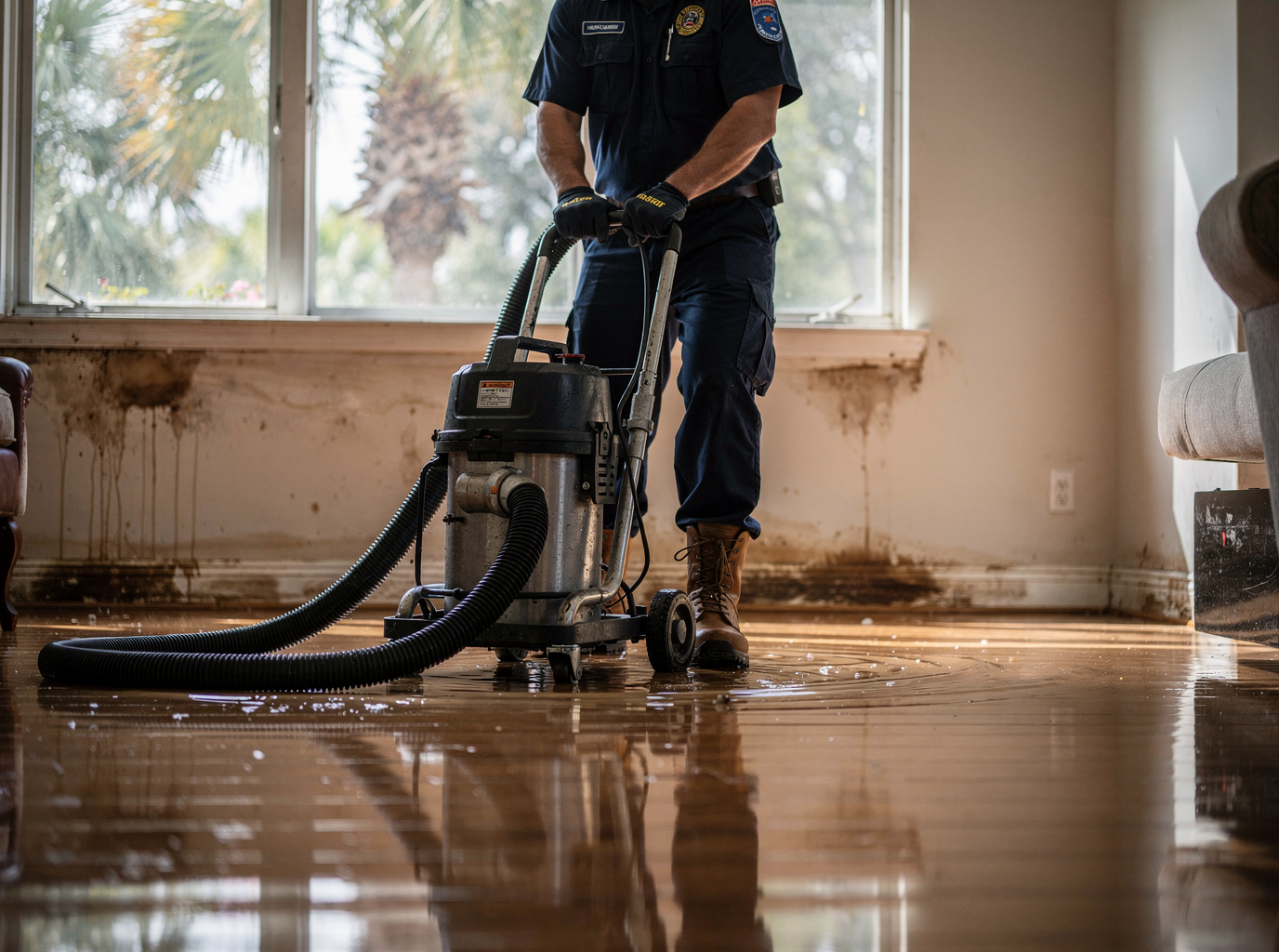
Blue Mound sits in the southern part of Jacksonville near the 32257 zip code with many single-family homes built from the 1960s onward on larger lots that back up to drainage ditches and low-lying swales. Heavy summer rains and the humid subtropical pattern often push water toward foundations and crawl spaces here, especially on streets with older clay or concrete pipe systems. Jacksonville Water Damage Restoration sends crews from our 9556 Historic Kings Rd S location to extract standing water, set drying equipment, and prevent mold in these properties before issues spread to neighboring homes.
Access in Blue Mound can be tight on narrow side streets and cul-de-sacs, so our trucks carry compact extraction units that fit driveways without blocking traffic. We work around the mild winters that still bring occasional cold snaps and pipe bursts, as well as the hot months when humidity keeps materials damp longer. Homeowners along roads feeding into Mandarin or nearby Atlantic Beach routes get priority scheduling because those corridors see frequent service calls after storms.
Our owner-operated team provides upfront quotes and lets customers inspect the drying process on site. We focus on the actual water intrusion points common to Blue Mound lots rather than generic citywide advice.
Around Blue Mound
We regularly work near:
- 📍Historic Kings Rd S
- 📍Blue Mound Rd
- 📍Mandarin Rd
- 📍St. Johns River access points near Beauclerc
Water Damage Restoration in Blue Mound — Local Notes
- •Many Blue Mound homes have raised crawl spaces that trap moisture after heavy rains because lot grading slopes toward the house rather than the street.
- •Narrow driveways and mature tree cover limit equipment placement, requiring smaller dehumidifiers and careful hose routing to avoid root damage.
- •Drainage ditches along side streets fill quickly in summer storms and can back up into yards when county outfalls are overwhelmed.
- •Older concrete slab homes here often lack proper vapor barriers, so water from roof leaks or plumbing failures migrates under flooring faster than in newer construction.